Rugby Terms Explained: And a New Beer to Enjoy During the Six Nations
February marks the start of the Six Nations, one of the biggest events in the rugby union calendar. Whether you’re a lifelong fan or just getting into the game, understanding the language of rugby can make watching the matches even more enjoyable.
Here are some key rugby union terms you’ll hear during the tournament:
Line Break
A line break happens when a player breaks through the opposition’s defensive line, creating space and an attacking opportunity. It’s one of the most exciting moments in rugby, often leading to a try and sending the crowd into a frenzy. You’ll often hear commentators talk about a “clean line break” when a ball-carrier gets past the last line of defence with support runners on their shoulder, setting up a potential scoring move.
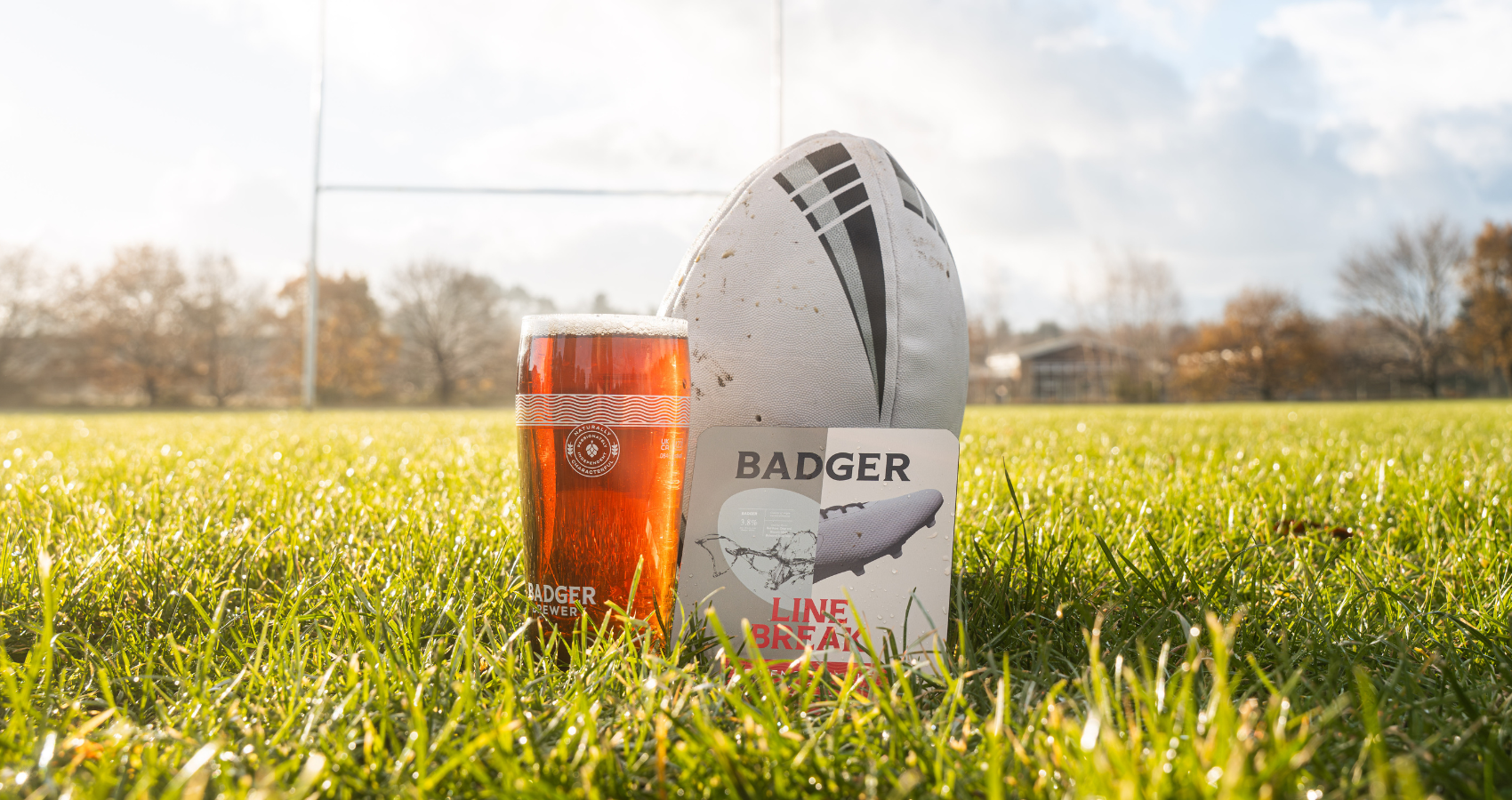
Ready to make a break for it? Line Break is Badger’s tribute to those heart-in-mouth moments when the crowd holds its breath and heroes dash for glory. Inspired by the electric energy of the Six Nations and the proud Red Rose, this 2026 seasonal Red English Ale is all about bold moves and good times.
Smooth, biscuity and just a little bit cheeky, it’s your perfect match-day companion. At 3.8%, it’s easy-drinking, full of character, and ideal for enjoying the game with friends.
Available on cask in Hall & Woodhouse managed houses from February to March, Line Break is here for the Six Nations season. Make sure you try it while it lasts.
Scrum
A scrum is a way of restarting play after a minor infringement, such as a knock-on or a forward pass. Eight players from each team bind together in three rows and push against each other while the ball is rolled into the tunnel between them by the scrum-half. The front row is made up of two props and a hooker, whose job is to strike for the ball with their foot, while the second and back rows provide power and stability so their team can secure possession and launch an attack.
Try
A try is the main way to score points in rugby union and is worth five points. It’s achieved by grounding the ball in the opponent’s in-goal area, which means placing downward pressure on the ball with hand, arm or upper body while it is in contact with the ground. Tries can come from patient phase play, a burst from a line break, or a clever move from a set piece, and they often swing the momentum of a tight Six Nations clash.
Conversion
After scoring a try, the team has the chance to kick the ball through the posts for an extra two points; this is called a conversion. The kick is taken in line with where the try was scored, so touching down closer to the posts gives the kicker a better angle. A reliable goal-kicker can be the difference between victory and defeat, especially in closely fought championship matches where every point really counts.
Ruck
A ruck forms when the ball is on the ground and at least one player from each team is on their feet, bound over the ball and contesting for it. Players must stay on their feet and join from behind their own side of the ruck, which helps keep the contest fair and safe while the attacking team looks to recycle quick ball. Winning the breakdown battle by clearing out opponents and securing possession is a key part of maintaining momentum in the game and setting the platform for those match-winning moves.
Offside
Offside in rugby is all about being in the right place at the right time, relative to the ball and your teammates. If a player is in front of the kicker or ahead of the hindmost foot at a ruck or maul and interferes with play, they are considered offside and can be penalised, often costing their team valuable territory or three points. Staying alert to the offside line and retreating quickly when needed helps defenders apply pressure legally while attackers use clever kicking and passing to exploit any lapse in discipline.
Knock-on
A knock-on happens when a player loses control of the ball and it travels forward off their hand or arm, or when they attempt to catch it and it goes forward onto the ground or another player. Play is usually stopped and restarted with a scrum to the opposition, making it one of the most common ways teams hand over possession. Cutting down on knock-ons through good handling skills and smart decision-making under pressure is crucial, especially in wet or high-intensity Six Nations matches where small errors can decide the result.
Lineout
A lineout is used to restart play when the ball has gone into touch, with players from both teams lining up perpendicular to the touchline and the ball thrown down the middle. Jumpers are lifted by their teammates to compete in the air for possession, and well-drilled lineout moves can launch powerful driving mauls or slick backline attacks. Having a reliable thrower, strong jumpers and clear calls makes the lineout a prime platform for territory, control and those all-important scoring opportunities
Now that you know some of the essential rugby union terminology, you’re ready to enjoy the Six Nations like a pro. And what better way to celebrate the action than with a pint of our new seasonal ale in-hand?