

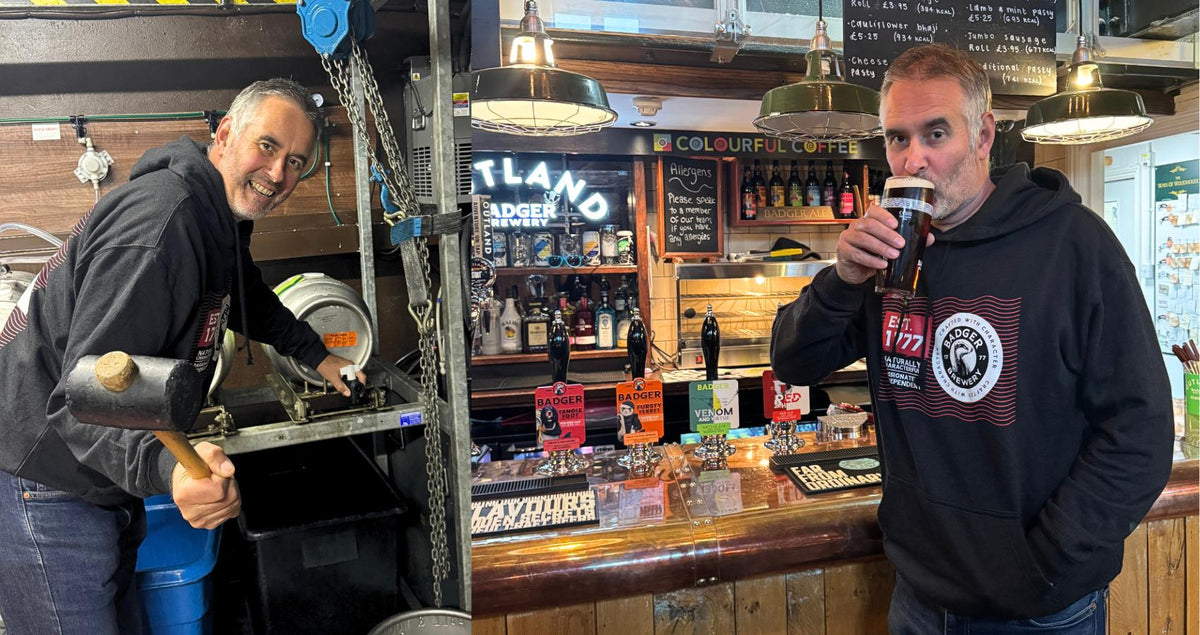
Tapping Tradition: A Cask Ale Week Q&A with Badger’s Head Brewer, Toby Heasman
Cask ale is a live, natural beer. Unlike many modern beers, it undergoes a secondary fermentation in the very cask it’s served from.
What is cask ale?
Cask ale is a live, natural beer. Unlike many modern beers, it undergoes a secondary fermentation in the very cask it’s served from. This means the beer is unpasteurised and still contains active yeast, which gives it a unique depth of flavour and a softer, more natural carbonation. It’s often described as beer in its purest, most traditional form.
What’s the difference between cask ale and keg beer?
The main difference is that cask ale continues to condition in the vessel, whereas keg beer is carbonated, often filtered, and sealed before reaching the bar. At the Badger Brewery, we fill casks directly from the fermenter, so the beer still contains a controlled amount of yeast to develop naturally. Keg beer, on the other hand, is often force-carbonated and served at higher pressure, giving it a different mouthfeel and character.
How to tap cask ale…
Tapping a cask is an art in itself. The cask should be placed horizontally and tapped 48 hours before serving to allow it to settle. First, a soft spile (sometimes called a tut) is driven into the shive hole to release excess pressure. Once the beer has “breathed,” the tap is knocked into the keystone at the front of the cask. This process allows the ale to condition gently and ensures it pours cleanly when service begins.
And how long does cask ale last once it’s been tapped?
Cask ale is best enjoyed fresh. Once a cask has been broached, it should be served within 4 days. After that, oxygen and yeast activity can affect flavour and quality.
How long does cask ale take to settle before serving?
Once delivered and racked in the cellar, cask ale needs 24-48 hours to settle. This allows the yeast and natural sediment to drop to the bottom of the cask, ensuring a clear, bright pint at the bar.
What temperature should cask ale be served at?
Cask ale should be served at around 12°C – the traditional, natural temperature of a UK cellar. Serving too warm will make the beer taste flat and heavy, while serving too cold mutes the flavours. The cellar temperature is crucial for showcasing the ale at its best.
What’s the proper way to change and maintain a cask of ale, including cleaning the lines and pouring correctly?
Looking after cask ale is about consistency and care. Here’s a breakdown:
How to look after cask ale: Keep the cellar at a steady 12-13°C, monitor spiles to control conditioning, and avoid unnecessary agitation of the cask. Finally, when pouring, allow the beer to flow naturally under gravity or via a handpull, rather than forcing it, to preserve the smooth, natural carbonation.
How to change a cask ale: Always use the correct sized cask for your expected turnover, ensuring it can be sold within 4 days. When one cask runs out, carefully remove it and tap a fresh one that has had time to settle.
How to clean cask ale lines: Beer lines should be cleaned after each cask, and at a minimum once a week, using appropriate cleaning solutions to prevent build-up and off flavours.
How many pints are there in a cask of ale?
It depends on the cask size. There are three common measures:
- A Pin (4.5 gallons) holds 36 pints.
- A Firkin (9 gallons) holds 72 pints.
- A Kilderkin (18 gallons) holds 144 pints.
Looking to enjoy Badger on cask? Come along to one of our Hall and Woodhouse pubs to enjoy a pint of Fursty Ferret, Tangle Foot or one of our limited-edition seasonals.
Please Drink Responsibly